
Why Rider Asymmetry Directly Influences Horse Movement and Performance
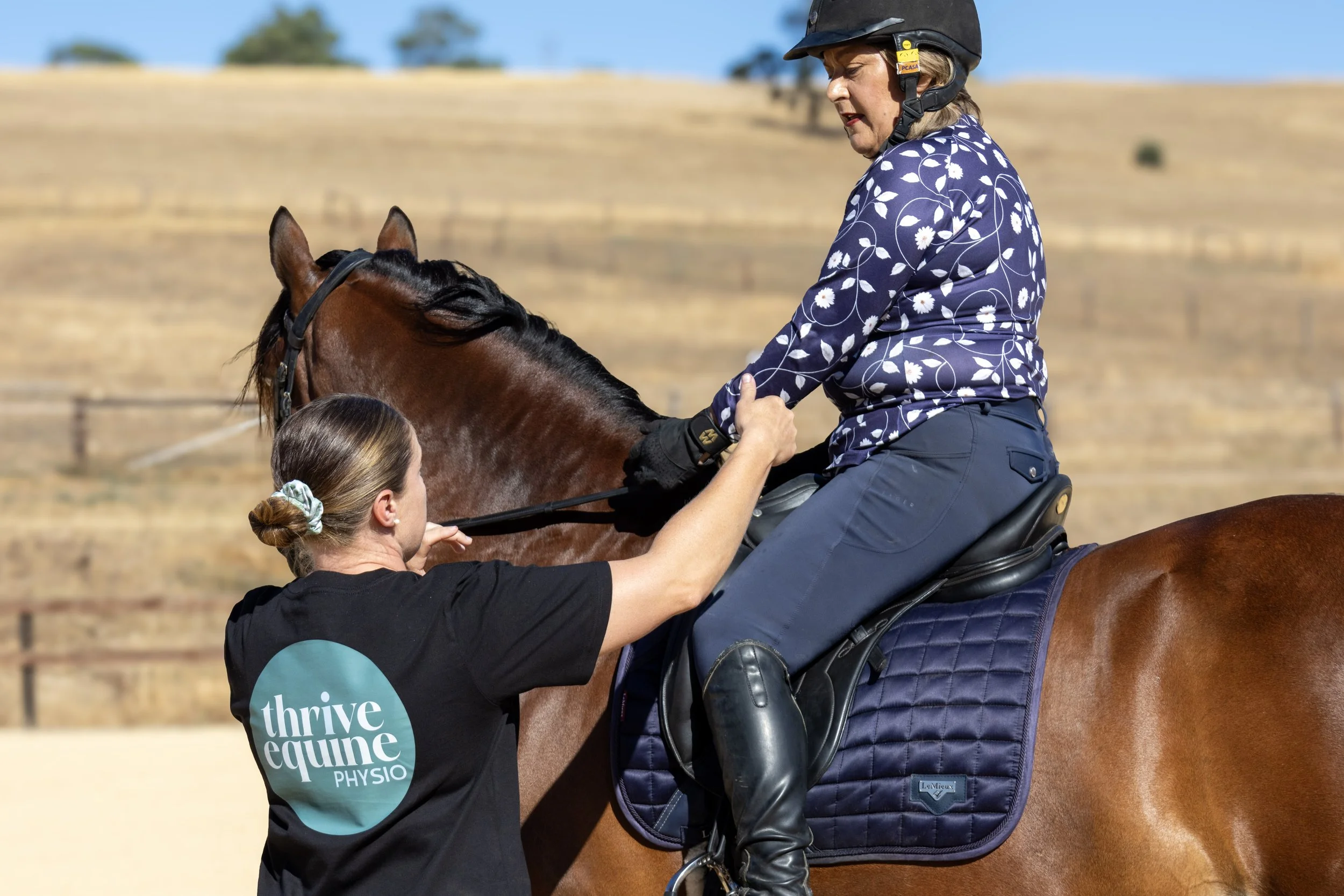
We spend a lot of time analysing our horses.
We assess their gait, their way of going, their strength and their straightness.
Far less often do we assess the person sitting on top.
Rider asymmetry is one of the most common and overlooked contributors to compromised movement quality, recurrent soreness and performance plateaus in ridden horses. It is rarely intentional. More often, it reflects differences in mobility, motor control or strength between the left and right sides of the rider’s body.
What Is Rider Asymmetry?
Rider asymmetry refers to measurable differences between the left and right sides of the body that influence how load is distributed through the saddle.
This may include:
• Pelvic rotation or side shift
• Uneven weight through the seat bones
• Reduced hip mobility on one side
• Thoracic stiffness
• Shoulder dominance
• Differences in leg pressure or stability
Most riders are not perfectly symmetrical. That is normal.
The issue arises when asymmetry becomes significant enough to alter how forces are transferred to the horse.
How Asymmetry Transfers to the Horse
Horses are highly responsive to load.
If a rider consistently loads one side more heavily, rotates their pelvis or collapses through one hip, the horse must compensate.
Over time, this may present as:
• Difficulty maintaining straightness
• Resistance in one rein
• Uneven contact
• Shortened stride behind
• Difficulty in lateral work
• Recurrent muscular tightness
The horse adapts to the rider’s pattern. Because horses are honest athletes, they will continue to work through asymmetrical loading until compensation becomes discomfort.
Why This Matters for Performance
At higher levels of training, small asymmetries matter more.
When you are asking for collection, lateral engagement or increased impulsion, symmetry becomes critical. If the rider cannot stabilise their pelvis, control rotational forces or distribute load evenly, the horse cannot produce optimal movement quality.
This does not mean the rider is doing something wrong. It means their physical capacity may not yet match the demands being placed on the horse.
That distinction is important.
Common Patterns I See in Rider Assessments
In rider physiotherapy assessments, the most consistent findings are subtle control deficits that change how a rider communicates through their seat.
The most common patterns include:
Reduced lumbopelvic mobility and control, which alters how load transfers through the saddle and limits clear communication through the seat.
Bracing through the abdominal wall in an attempt to feel stable, which often creates stiffness in the horse and reduces the effectiveness of the rider’s aids.
Over-arching through the lower back to sit up tall, sacrificing deep core control and pelvic neutrality in the process.
Altered motor patterns between left and right sides, which frequently show up as differences between reins and inconsistencies in lateral work.
These patterns are rarely obvious to the rider. Most are well-intentioned strategies to improve position. Over time, however, they change how force, pressure and movement are delivered to the horse.
And horses respond accordingly.
Why Guessing Is Not Enough
Many riders try to consciously sit straighter or correct posture.
But without assessing off the horse, it is difficult to determine whether the driver is mobility, strength, motor control or habit.
Trying to correct asymmetry without understanding the underlying cause can lead to overcompensation and further imbalance.
Assessment creates clarity. A structured rider physiotherapy assessment identifies where asymmetry exists and how it is influencing your horse’s movement. From there, intervention becomes specific and progressive rather than guesswork.
Treating the Rider as Part of the Performance Equation
We treat horses like athletes.
Riders are athletes too.
If we expect horses to develop strength, stability and symmetry, we must hold ourselves to the same standard.
A structured rider physiotherapy assessment identifies:
• Where asymmetry exists
• How it may be influencing the horse
• What needs to change
• How to progressively address it
The goal is not perfection. The goal is improved load transfer, improved movement quality and improved harmony under saddle.
If you are working to improve your horse’s straightness, performance or comfort, it is worth considering whether the limiting factor may not be the horse at all.
Small differences in mobility and control can have a big impact under saddle. When those differences are addressed properly, both horse and rider tend to feel the change.
Ready to assess your riding biomechanics?
Rider physiotherapy appointments are available across South Australia, with limited availability each month.