
What I Pick Up in the First 10 Minutes of a Rider Assessment
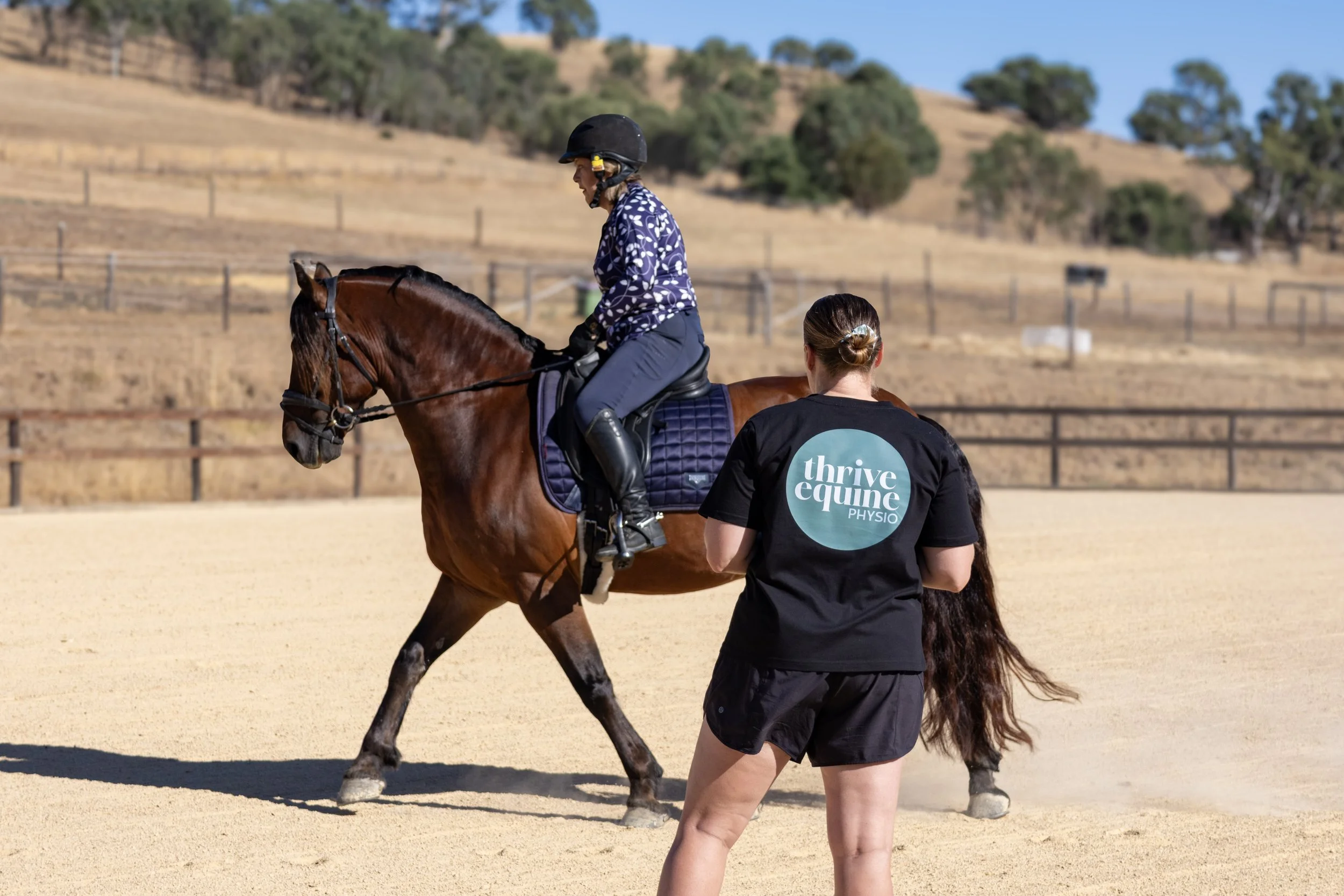
Rider physiotherapy assessments don’t start on the treatment table.
They start in the saddle.
Within the first few minutes of watching a rider, there is often a clear picture of how their body is influencing what’s happening underneath them.
This isn’t about picking faults.
It’s about identifying patterns that are limiting how effectively the rider can sit, move and apply their aids.
How the Rider Sits in the Saddle
One of the first things I look at is how the rider sits.
This includes:
• where their weight is distributed
• whether they are centred
• how stable they are through the trunk
Small shifts in position can have a large impact.
Riders are often slightly heavier to one side, or sitting behind or in front of the movement without realising.
This changes how the horse loads and responds.
How the Rider Moves With the Horse
The next thing that becomes clear is how well the rider moves with the horse.
This is not about sitting still.
It is about allowing the pelvis and trunk to follow the movement while maintaining control.
When this is working well:
• the rider looks smooth
• the seat stays connected
• the movement appears effortless
When it is not:
• the rider may look rigid or disconnected
• the seat loses contact
• the movement becomes harder to sit
Signs of Bracing Instead of Control
A very common pattern is bracing.
This is often used to feel stable, particularly in sitting trot or transitions.
It can look like:
• holding through the trunk
• restricted breathing
• a lack of movement through the lower back and hips
While it may feel secure, it reduces the ability to absorb movement.
Differences Between Left and Right
Most riders are not symmetrical.
Within the first few minutes, it is often clear that one side is doing something different to the other.
This might show up as:
• uneven weight through the saddle
• one rein feeling more consistent than the other
• a difference in control or stability between sides
These differences influence how the horse moves on each rein.
How Aids Are Being Applied
Rider position and control directly affect how aids are delivered.
Even when a rider understands what they are trying to do, their body may not be able to execute it clearly.
This can result in:
• inconsistent contact
• unclear transitions
• reduced effectiveness of aids
This is often where riders feel like they are “doing the right thing”, but not getting the outcome they expect.
What This Means for the Horse
The horse responds to what the rider is doing.
When the rider is:
• uneven
• bracing
• out of sync with the movement
The horse often becomes:
• tighter through the back
• less consistent in rhythm
• more difficult to keep straight
These are commonly addressed as training issues, but the rider is often part of the picture.
Why This Matters
The first 10 minutes gives a clear starting point.
Not a final answer, but enough to identify what needs to be looked at more closely.
From there, the rider steps off the horse and we assess:
• mobility
• strength
• coordination
• control
This allows us to understand why those patterns are happening.
What Happens Next
Once the underlying limitations are identified, a plan can be put in place.
This may include:
• targeted exercises off the horse
• changes to warm-up or riding approach
• strategies to improve control and symmetry
The goal is not just to change how the rider looks.
It is to change how the rider functions.
Ready to Address It Properly?
If you’ve been working on the same things in your riding without seeing change, it may be worth looking at what your body is doing in the saddle.
Rider physiotherapy assessments identify what is limiting your riding and provide a structured plan to address it.
Appointments can be arranged via the contact form on the website.