
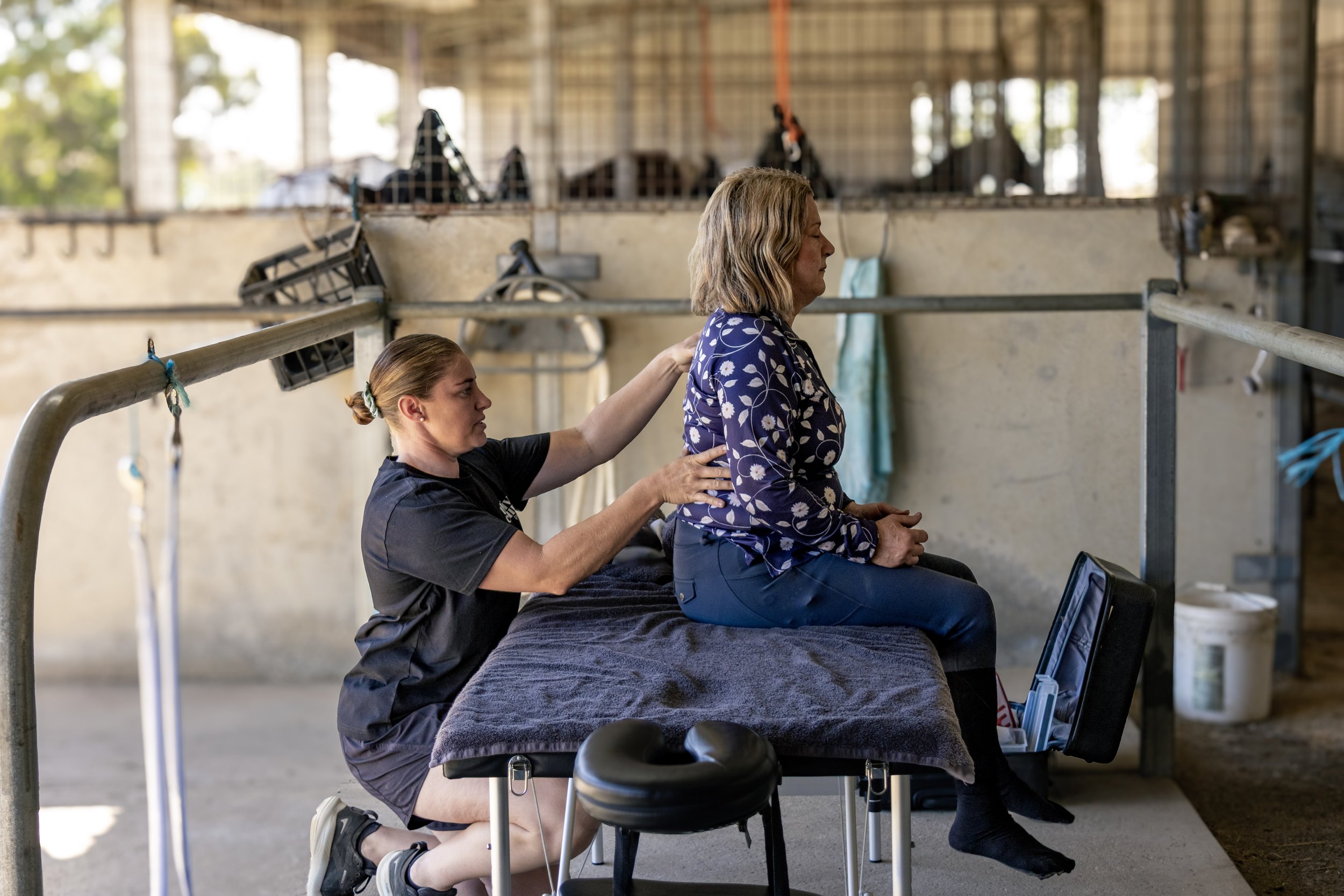
Rider physiotherapy isn’t just about identifying what’s not working.
It’s about improving how your body performs in the saddle.
This is done through targeted exercise programs designed to improve strength, control, mobility and coordination, alongside treatment where needed.
Exercises are then progressed both off the horse and in the saddle, so the changes carry over directly into your riding.
The question most riders have is: what actually improves?
Improved Motor Control
One of the first things that changes is how well you can control your body.
Motor control is your ability to coordinate movement.
Not just being strong or flexible, but being able to:
• stay centred
• control your position
• use each side of your body effectively
When this improves, riding becomes more consistent.
You’re not correcting your position every stride. It starts to feel more automatic.
Increased Strength (Where It Matters)
Strength in riding isn’t about doing more.
It’s about having enough strength in the right areas to support your position.
After rider physio, this often looks like:
• better trunk support without bracing
• improved stability through transitions
• less reliance on gripping or holding
The rider feels more secure, without having to work harder.
Better Body Awareness
Many riders know what they’re meant to be doing, but can’t feel when they’re not doing it.
Body awareness is the ability to recognise:
• where your weight is
• what each side of your body is doing
• how your position is changing
When this improves, you can:
• self-correct more effectively
• respond to feedback from your coach
• make meaningful changes, not just try harder
Improved Mobility
Mobility allows you to move with the horse rather than against it.
This is especially important through:
• the hips
• the lower back
• the thoracic spine
When mobility improves:
• sitting trot becomes easier
• the seat stays connected
• the rider can follow the movement more effectively
Without it, riders often compensate by bracing or leaning back.
Reduced Pain and Tension
Pain changes how you move.
Even low-level discomfort can lead to:
• guarding
• asymmetry
• altered movement patterns
Addressing pain allows the body to move more naturally and consistently.
This alone can make a significant difference to riding quality.
What This Looks Like in the Saddle
When these changes come together, the difference in riding is noticeable.
Riders often report:
• feeling more stable without bracing
• improved consistency between reins
• being able to sit movements more easily
• clearer, more effective aids
Riding starts to feel more controlled and less effortful.
How This Affects Your Horse
Your horse feels the difference.
As the rider becomes more consistent and controlled:
• the horse can swing more freely through the back
• contact becomes more even
• rhythm becomes more consistent
• transitions feel smoother
What previously felt like a training issue often improves without changing the horse’s program.
Ready to See the Difference?
If you want to improve your riding, it’s worth looking at what your body is doing in the saddle.
Rider physiotherapy assessments identify what is limiting your movement and provide a structured plan to improve it.
Appointments can be arranged via the contact form on the website.