
The Fundamentals of Sitting Trot: What Riders Need to Know
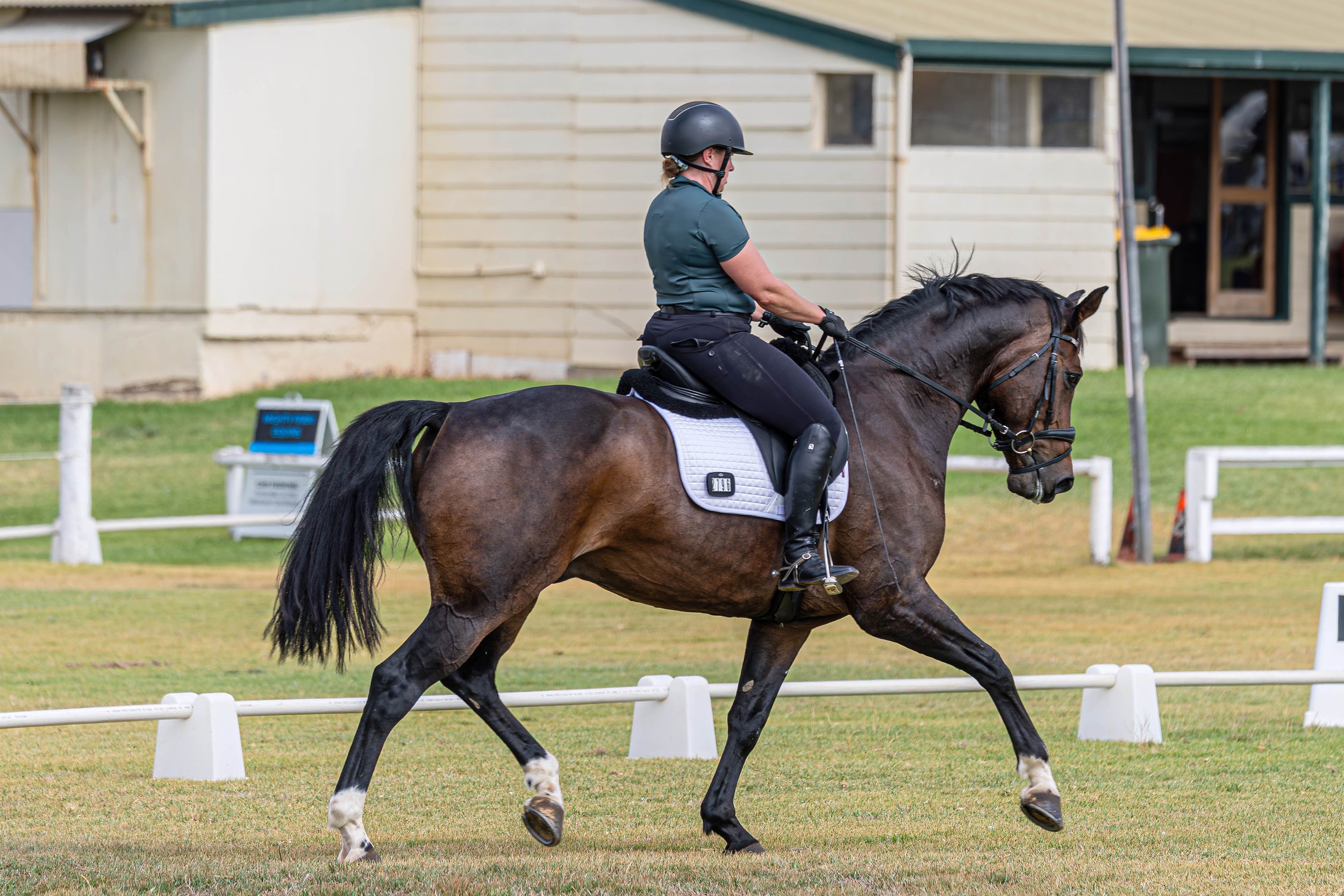
Sitting trot is often treated as something you just “get better at” with time.
But in reality, it is a physical skill.
It requires specific strength, control and mobility. Without that, riders often compensate in ways that make the movement harder for both themselves and the horse.
What Sitting Trot Actually Requires
At its core, sitting trot is about absorbing and redistributing force.
The horse is producing vertical and forward movement. The rider’s job is to:
• stay balanced over the centre of the saddle
• move with the horse’s back
• maintain clear, effective aids
This doesn’t come from “holding on” or trying to stay still.
It comes from the body being able to move where it needs to and stabilise where it should.
The Role of the Deep Core
When we talk about core strength in riding, it is often misunderstood.
It is not about bracing or tightening everything.
It is about motor control of the deep stabilising muscles. These include muscles that support the spine and pelvis and allow the rider to remain stable while still moving with the horse.
When this system is working well:
• the rider can absorb movement without bouncing
• the seat stays connected without gripping
• aids become quieter and more effective
When it is not:
• riders brace to feel stable
• breathing becomes restricted
• movement becomes rigid rather than controlled
This is where sitting trot starts to feel difficult.
Lumbopelvic Mobility: Moving With the Horse
The pelvis needs to be able to follow the movement of the horse’s back.
This requires mobility through the lower back and hips, combined with control.
When this is present:
• the rider can stay with the rhythm of the trot
• the movement looks smooth and effortless
• the horse can continue to swing through its back
When it is limited:
• the rider sits behind the movement or gets left behind
• the seat becomes disconnected
• the horse often loses rhythm or becomes tight through the back
Riders will often try to compensate for this by leaning back or locking through the lower body.
Common Compensation Strategies
When riders don’t have the physical capacity for sitting trot, they tend to find ways to “get through it”.
The most common ones I see are:
Bracing Through the Core
This is often done to feel stable.
In reality, it reduces the body’s ability to absorb movement and creates a rigid seat.
Breath Holding
Breathing and core function are closely linked.
When breathing stops, the body stiffens and loses its ability to adapt to movement.
Leaning Back
Often used to try and stay in the saddle.
This shifts the rider out of balance and places more load through the horse’s back.
How This Affects the Horse
Rider movement directly influences how the horse moves.
When the rider is bracing or out of sync:
• the horse may become stiff through the back
• rhythm can become inconsistent
• transitions feel abrupt rather than smooth
• connection becomes less consistent
Over time, this can limit performance and contribute to ongoing issues that are often mistaken as training problems.
Sitting Trot Is a Skill, Not Just Practice
Spending more time sitting trot does not automatically improve it.
If the underlying strength, mobility and control are not there, the same compensations will continue.
Improving sitting trot requires:
• developing deep core control
• improving lumbopelvic mobility
• building the ability to absorb movement without bracing
This is where targeted rider physiotherapy can make a significant difference.
Where to From Here
If sitting trot feels difficult, inconsistent or physically demanding, there is usually a reason.
Identifying what is limiting your movement allows you to address it directly, rather than working around it.
Rider physiotherapy assessments look at how your body is functioning both on and off the horse, then provide a clear plan to improve it.
More information is available via the website, and appointments can be booked through the contact form.