
Inside an Equine Rehabilitation Program: What Actually Happens and Why It Matters
Rehabilitation can feel like a vague concept for many horse owners. You know your horse needs more than rest, but what does a rehabilitation program actually involve? And how is it different from simply bringing your horse back into work slowly?
A well-designed equine rehabilitation program is not guesswork. It’s a structured, progressive plan built around how your horse moves, what tissues are recovering and what they need to safely return to work.
Below, we break down what happens inside a rehabilitation program and why each step matters.
1. Initial Assessment: Understanding the Whole Horse
Every rehabilitation program begins with a thorough assessment. This isn’t just about identifying pain. It’s about understanding how your horse is moving now and what’s changed since injury.
An equine physiotherapist assesses:
Posture and static alignment
Movement quality at walk and trot
Joint range of motion and symmetry
Muscle development and strength deficits
How the horse loads and unloads different limbs
This forms the foundation of the program. Without this step, rehab becomes generic rather than targeted.
2. Defining the Rehab Goals
Rehabilitation isn’t one-size-fits-all. A horse recovering from a tendon injury has very different needs to a horse returning from back pain or post-surgical recovery.
Clear goals are set based on:
The type and stage of injury
The horse’s discipline and workload
Current movement limitations
Short-term and long-term expectations
These goals guide exercise selection, progression and timelines.
3. Progressive Exercise Selection
At the core of every rehab program is progressive loading. The aim is to rebuild physical capacity without overloading healing tissues.
Exercises may include:
In-hand walking programs
Controlled groundwork
Pole work or terrain-based exercises
Strength and conditioning exercises specific to the horse’s deficits
Intensity, duration and complexity are increased gradually based on how the horse adapts, not based on a fixed timeline.
4. Ongoing Physiotherapy Treatment
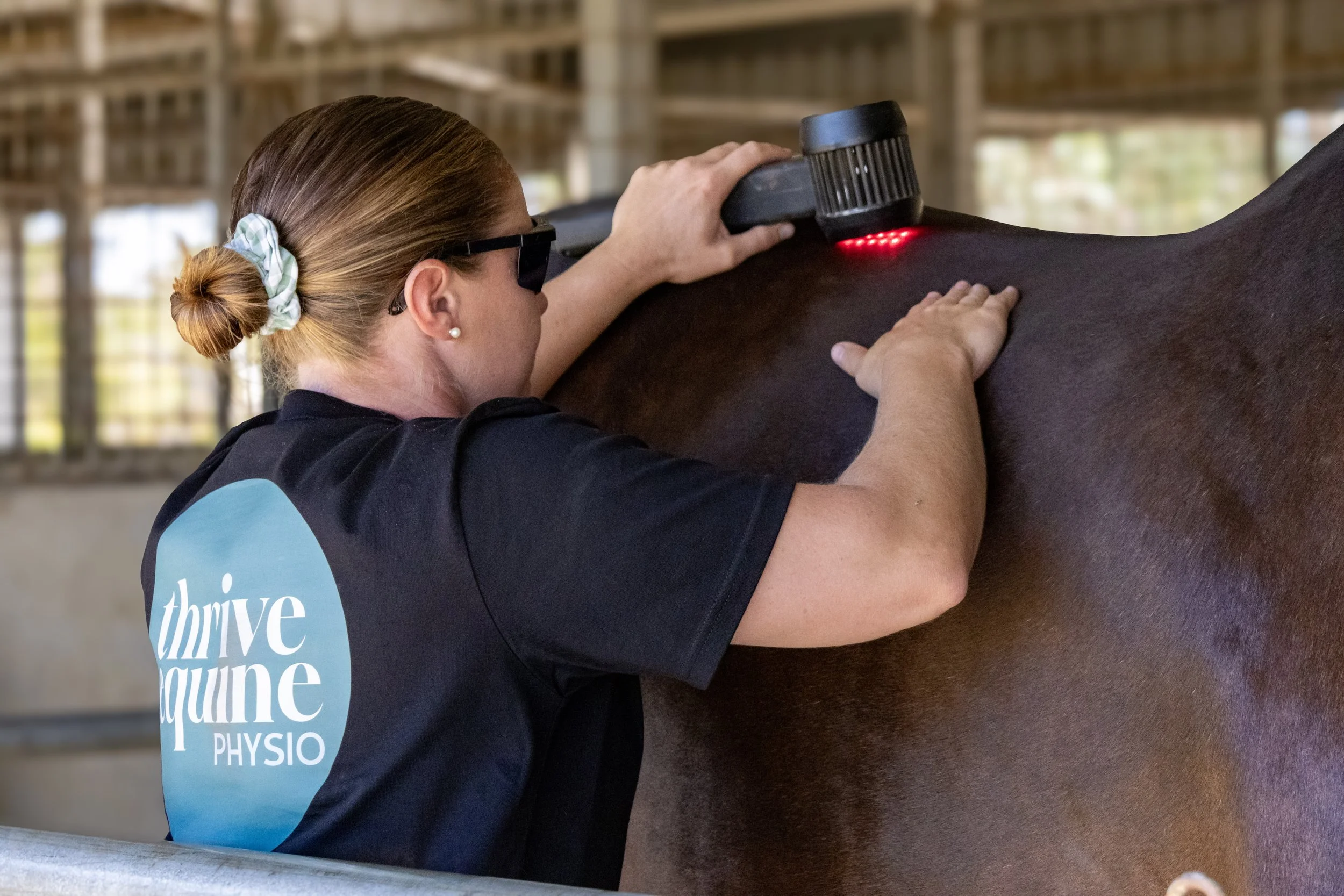
Hands-on physiotherapy remains an important part of the rehab process. Treatment helps to:
Address muscle tension or restriction
Improve joint range of motion
Support symmetry and movement quality
Reduce compensatory patterns as workload increases
Treatment is adjusted as the horse progresses through different rehab phases.
5. Monitoring, Reassessment and Progression
Rehabilitation is dynamic. Horses adapt at different rates and programs need to change accordingly.
Regular reassessment allows the physiotherapist to:
Monitor response to loading
Identify early signs of overload or fatigue
Progress or modify exercises appropriately
Ensure the horse is coping physically at each stage
This ongoing feedback loop is what makes rehab effective and safe.
6. Preparing for Return to Work
The final phase of rehabilitation focuses on preparing the horse for the specific demands of ridden work and competition.
This includes:
Increasing workload tolerance
Improving strength and control under more complex conditions
Reducing reliance on compensatory movement patterns
Ensuring the horse can cope with variation in footing, intensity, and duration
A horse that completes rehab well is not just sound, they are prepared.
Why Structured Rehabilitation Makes a Difference
Without a structured rehabilitation program, many horses return to work with unresolved strength and movement deficits. This often leads to recurring niggles, plateaued performance or re-injury.
Rehabilitation bridges the gap between injury and long-term soundness by rebuilding the foundations that rest alone cannot.
Supporting Your Horse Through Recovery
At Thrive Equine Physio, rehabilitation programs are designed and delivered by an equine physiotherapist, with a focus on movement quality, progressive loading and long-term outcomes.
Whether your horse is recovering from injury, surgery or extended time off, a tailored rehabilitation program helps ensure they return to work stronger, more resilient and better prepared for the demands ahead.